Little Prince
The Little Prince is the central figure of Antoine de Saint-Exupéry's fable, a boy with golden hair who appears in the African desert, refuses to answer questions, and vanishes as mysteriously as he came. His journey across planets and his relationship with a single rose on his tiny asteroid form the emotional and philosophical core of the story, transforming the Narrator's understanding of love, responsibility, and the invisible bonds that give life meaning. The Little Prince's departure from Earth leaves behind a landscape that the Narrator calls "the loveliest and saddest landscape in the world" , a place where the boy first appeared and then disappeared, forever altering how the stars are heard.
Identity and Arrival
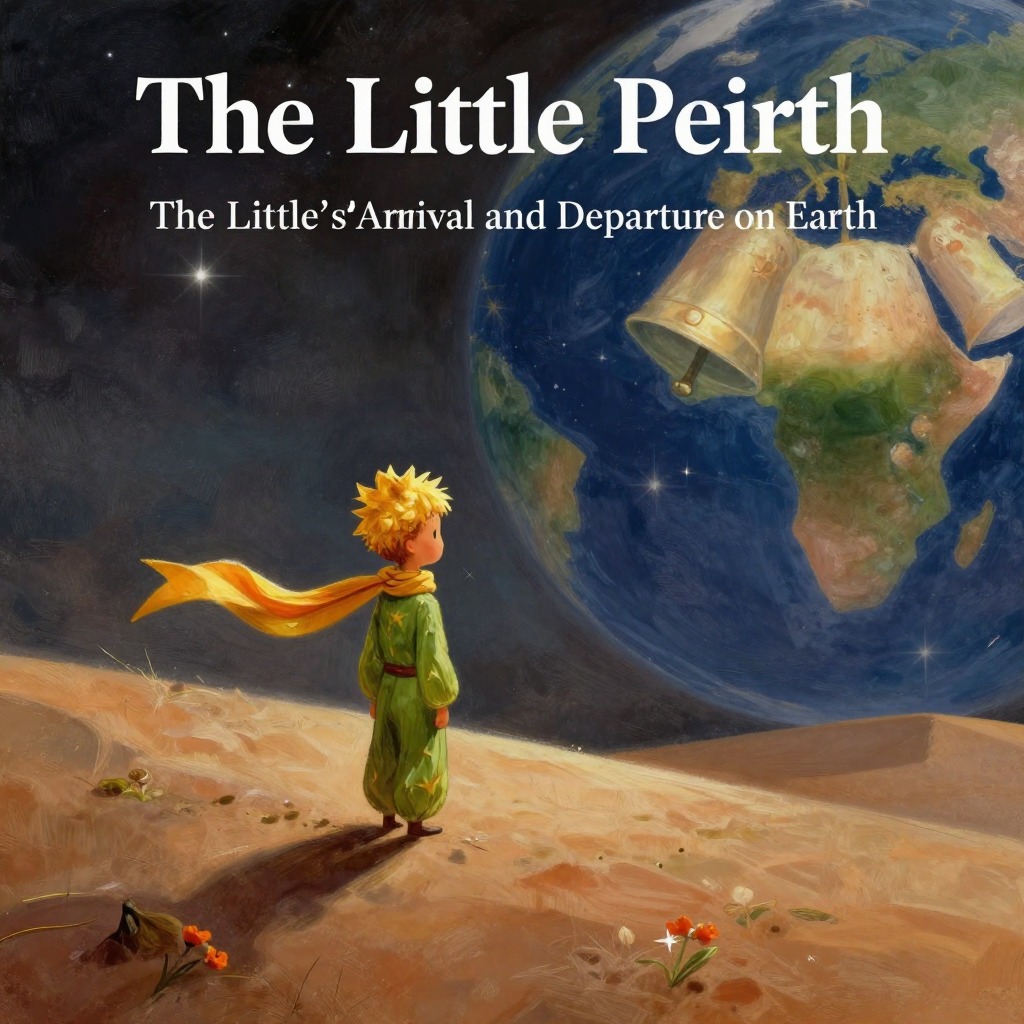
The Little Prince is first encountered by the Narrator in the African desert, a setting that becomes the stage for their entire relationship. He is described as a "little man" who "laughs, who has golden hair and who refuses to answer questions" . This refusal to engage with adult interrogation marks him as a being governed by a different logic, one that prioritizes feeling and mystery over explanation. The Narrator later draws the landscape of their meeting twice, emphasizing its importance: "It is the same as that on the preceding page, but I have drawn it again to impress it on your memory" . The boy's arrival is not a dramatic event but a quiet, almost miraculous appearance, and his departure is equally silent—the Narrator finds no body at daybreak, only the certainty that he has returned to his planet .
Life on His Planet and the Care of the Rose
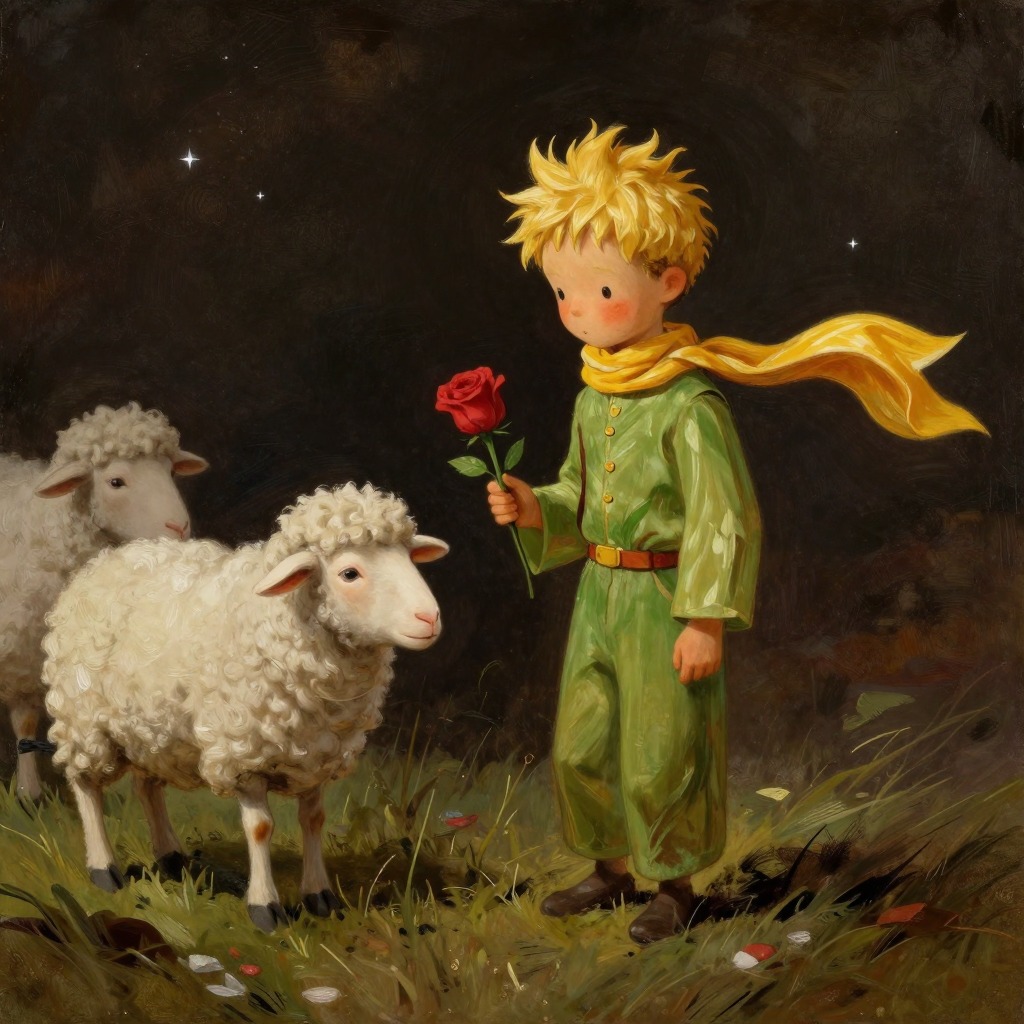
The Little Prince's existence on his home asteroid is defined by two daily rituals: he shuts his flower under her glass globe every night, and he watches over his sheep very carefully . These acts of protection are not mere chores but expressions of devotion. The flower—a single, vain, and fragile rose—is the object of his love and his anxiety. The Narrator, reflecting on the boy's fate, oscillates between hope and dread: "At one time I say to myself: 'Surely not! The little prince shuts his flower under her glass globe every night, and he watches over his sheep very carefully . . .' Then I am happy" . But the possibility of neglect haunts him: "On some one evening he forgot the glass globe, or the sheep got out, without making any noise, in the night . . .' And then the little bells are changed to tears" . The sheep, a gift from the Narrator, becomes a potential threat to the rose, and the boy's entire universe hangs on whether he can maintain his vigilance.
The Unfinished Muzzle and the Unresolved Question
A crucial detail deepens the uncertainty: when the Narrator drew the muzzle for the Little Prince, he forgot to add the leather strap . This oversight means the sheep may never have been able to fasten the muzzle, leaving the rose vulnerable. The Narrator's mind swings between two scenarios: one in which the Little Prince's careful habits protect the flower, and another in which a moment of absent-mindedness—"At some moment or other one is absent-minded, and that is enough!" —allows the sheep to eat the rose. This unresolved question becomes the story's central mystery: "nothing in the universe can be the same if somewhere, we do not know where, a sheep that we never saw has—yes or no?—eaten a rose" . The fate of the rose is unknowable, and that unknowability transforms the stars themselves: they become either "five hundred million little bells" of joy or tears of sorrow, depending on the answer .
The Narrator's Grief and the Call to Remember
Six years after the Little Prince's departure, the Narrator finally tells this story. He had never spoken of it before, and when his companions met him on his return, he simply said, "I am tired" . His sorrow is comforted but not entirely healed. He knows the boy went back to his planet because no body was found at daybreak, and he now loves to listen to the stars at night . The narrative is framed as a plea to the reader: "Look up at the sky. Ask yourselves: is it yes or no? Has the sheep eaten the flower? And you will see how everything changes" . The Little Prince's story is not a closed tale but an open question that each reader must answer for themselves, and no grown-up will ever understand "that this is a matter of so much importance" .
The Landscape of Loss and the Promise of Return
The final image is the desert landscape itself, drawn twice to impress it on memory. The Narrator instructs: "Look at it carefully so that you will be sure to recognize it in case you travel some day to the African desert" . He asks that anyone who comes upon that spot should wait, exactly under the star, and if a little man with golden hair appears who laughs and refuses to answer questions, they will know who he is. The request is heartbreaking: "please comfort me. Send me word that he has come back" . The Little Prince's return is not witnessed but hoped for, and the landscape becomes a threshold between absence and presence, a place where the invisible bond between the boy and the Narrator—and between the boy and his rose—continues to pulse. The story ends not with certainty but with a call to attention, a reminder that the most important things are seen only with the heart.